Strong Legal Representation for Motor Vehicle Accidents

At Galileo Law PLLC, we understand the impact of an accident. We fight tirelessly for your physical and financial recovery, protecting your rights against insurance companies. Contact us today.

Start the conversation

This is just how we get started.

206.537.4000

This field is for validation purposes and should be left unchanged.

Car Accidents

We guide you through the complex aftermath of a car crash, aggressively seeking maximum compensation to cover your medical bills and lost wages without delay.

Motorcycle Accidents

We protect motorcyclists from insurance bias, demanding justice and full compensation for the severe injuries and devastating impact these unfortunate crashes often cause you.

Truck Accidents

We stand up to large trucking companies and hold them accountable for negligence, ensuring you get the critical support needed after severe commercial truck collisions.

Vehicle Property Damage

We help resolve property damage disputes swiftly, forcing insurance companies to pay for fair repairs or the actual total replacement value of your damaged vehicle.

Clear judgment. Relentless advocacy.

The aftermath of a motor vehicle accident brings a rush of overwhelming feelings and urgent needs. You might be scared about your physical recovery, angry at a negligent driver, or exhausted from trying to hold everything together while an insurance adjuster plays games. The people who come to me are hurting in real ways — whether from a car crash, a motorcycle collision, or an accident involving a commercial truck — and that matters to me. However you’re feeling right now is normal, and you don’t need to defend it or explain it. My job is to find you where you are, understand what matters most in this moment, and meet you there.

From the very first conversation, we’re both preventing problems and setting a clear forward direction. We figure out the North Star for your case and start building toward it, whether that means stabilizing things quickly to get your vehicle repaired or moving carefully to secure a long-term medical settlement. I represent people across Washington who have been impacted by motor vehicle accidents when insurers delay claims, minimize the severity of a crash, or try to save themselves money at my clients’ expense.

You’ll work directly with me. I have an amazing team, and they’re here to support the work — not to stand between us. I’ll be straight with you about what’s possible, what isn’t, and what makes sense for your specific accident claim. And if I take your case, my commitment isn’t just that you’ll understand where things stand — it’s that I’ll shoulder the fight with you and pursue every measure of justice the law allows.

Galileo Law exists to support people when they’re hurt, solve problems that shouldn’t be theirs to carry, and get justice when powerful insurance companies profit by withholding it.

Accidents create vulnerability. Insurance companies exploit it. That’s not complicated — and it’s not acceptable.

I built this firm to stand with people in those moments and to fight, expertly and relentlessly, until the system takes responsibility for putting your life back together.

That’s the work. That’s the point.

TESTIMONIALS from clients and peers.

Our clients’ experiences are the true measure of our work and remain at the heart of everything we do. Navigating the aftermath of an accident can be one of the most overwhelming times in a person's life. The stories shared here reflect the profound trust our clients have placed in us during their most vulnerable moments. More than just legal victories, these accounts highlight the genuine care, straightforward communication, and relentless commitment we bring to every single case, alongside the life-changing results we work tirelessly to achieve.

He was thoughtful and professional, and insisted on a diligent care regiment towards recovery, even when I was feeling “better.”

Paul and his team are an excellent, thorough and hard working group. Don’t let insurance companies play the bully – your health is far too important! Paul was there for me from the beginning and persevered with me over a long recov⁠...

- Ryan A.

He is a great negotiator and works extremely hard for his client’s best interest

Paul has handled 2 accident cases for me in the last 4 years. Both times Paul has come through with a settlement that exceeded my expectations. He is a great negotiator and works extremely hard for his clients best interest.⁠...

- Dave W.

I would recommend Paul to anyone I know after a personal injury

Paul was with me each step of the way. Paul is a smart lawyer who seemed to know his profession and the process exceptionally well. I would recommend Paul to anyone I know after a personal injury.⁠...

- Dustin C.

He knows what he’s doing

Paul and Anna can relate to you – doesn’t matter who you are. I’ll just say, straight up, ‘Call this guy, he’ll do you right, he knows what he’s doing.⁠...

- Aaron O.

I would recommend his services to anyone

Paul is more advocate than attorney. Throughout every step, he kept me updated about how my case was proceeding. I would recommend his services to anyone.⁠...

- Tom S.

I would highly recommend Paul to anyone who has been injured

I tried a worksite injury case against Paul several years ago. At every phase of discovery and throughout trial, Paul was professional, courteous and a very skilled advocate for his client. I remember his closing argument to the jury wa⁠...

- Arthur Leritz

He is diligent, knowledgeable, and maintains a fierce work ethic

I strongly endorse this lawyer’s work. Paul Veillon is a superb lawyer and is well known for being a zealous advocate on behalf of his clients. His reputation for honesty is impeccable. He is diligent, knowledgeable, and maintains a f⁠...

- Angel Chenaur

Any client of his can be confident they will get a true professional

Paul is a top quality attorney because he consistently produces top quality work. Anything Paul works on is done with precision and care. He also has a great command of the law, in particular the civil rules of procedure. Any client of⁠...

- Rick Park

He gives practical and sound advice, demonstrating sharp legal acumen

I have seen Paul’s presentations at seminars to other trial layers. He gives practical and sound advice, demonstrating sharp legal acumen. His body of work speaks to this.⁠...

- Edward Le

Clients of his are lucky to have found him

Paul is a fantastic lawyer. He is smart, hard-working and dedicated. Clients of his are lucky to have found him.⁠...

- Kyle Olive

Paul will focus on what your case means to you rather than what it means to him or his firm

Paul is a excellent attorney in every respect. Like most lawyers, he understands the legal system and the relevant law in the areas that he specializes in. Unlike most attorneys, Paul will focus on what your case means to you rather tha⁠...

- Grady Martin

He went above and beyond

Paul was clear & transparent. He kept the lines of communication open and followed through on everything. He even fought for the value of my car. He went above and beyond.⁠...

- Tom L.

I am glad to know there are people like Paul who care for clients so personally

Through our entire case, Paul Veillon has been nothing short of extraordinary: helpful, informative, communicative, open, supportive, honest, and quick. He has never failed to get back quickly or answer questions. I am glad to know ther⁠...

- Luke H.

You won’t go wrong with Paul as your lawyer

Paul and his assistant Anna took care of me and were a pleasure to deal with. They are both very responsive to questions and concerns and I never once felt concerned about my case. You won’t go wrong with Paul as your lawyer.⁠...

- Sarah C., Fellow Trial Attorney

One Lawyer. One Strategy. A Team That Executes It.

You won’t be handed off to a call center or a rotating cast of case managers.
I set the strategy for your case and stay involved from beginning to end. I work with a small, experienced team so that communication stays clear and decisions stay intentional. When something changes in your case, you’ll know why — and what it means.

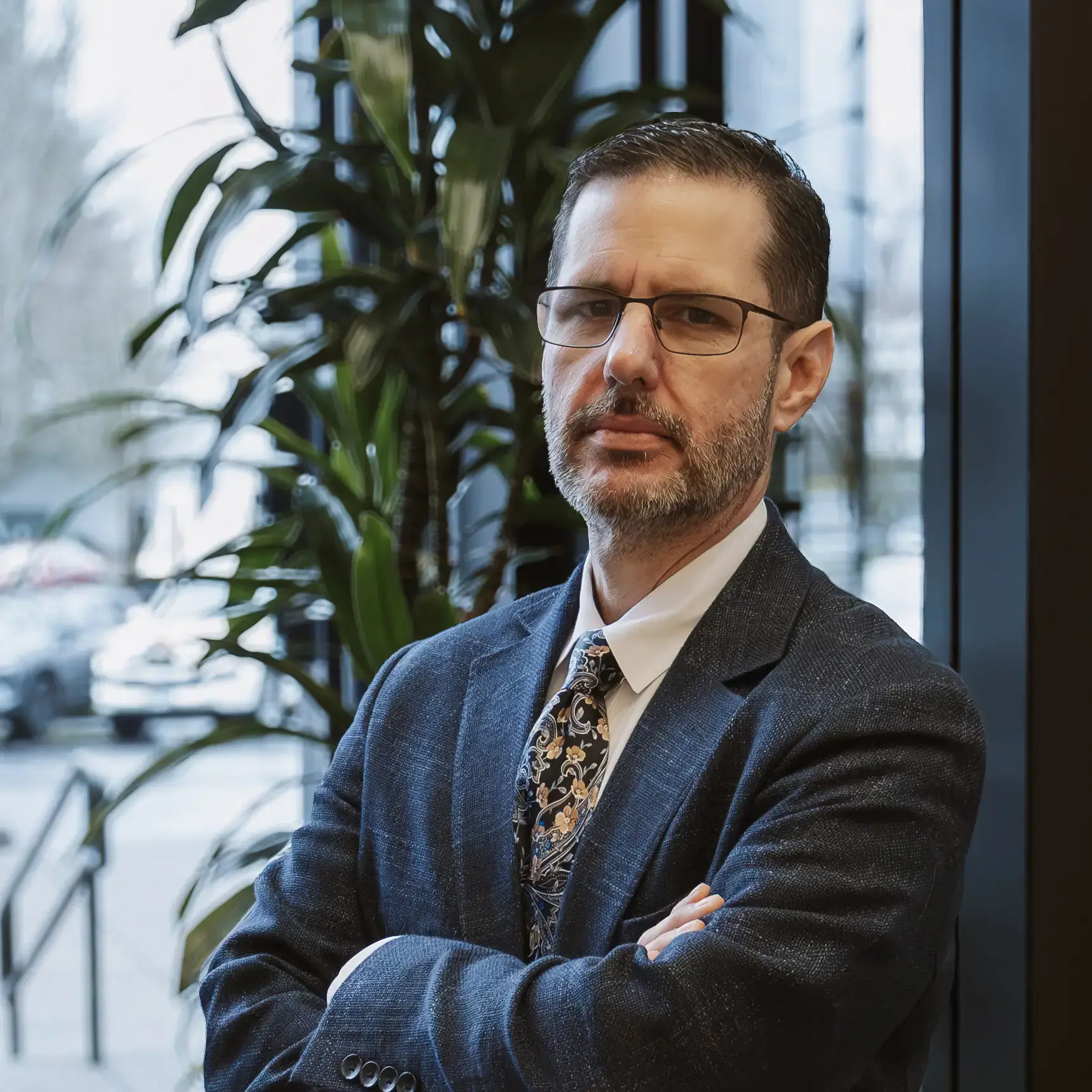
Paul Veillon

Attorney at Law

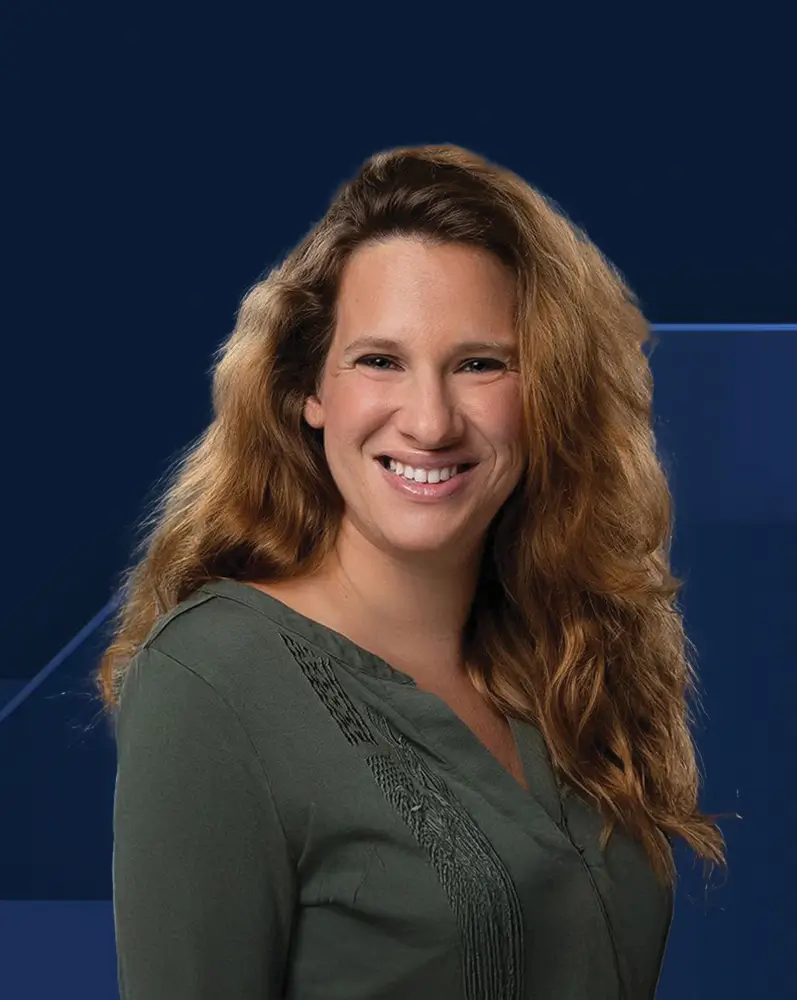
Kamber D’Ombrain

Paralegal

Alexandra Muscarella

Legal Assistant

Straight answers to common questions.

You don’t need to have everything figured out before you reach out.
Some questions come up again and again — about money, timing, work, and what happens if the insurance company won’t cooperate. You can read through these at your own pace, or skip them entirely and talk it through with me when you’re ready.
There’s no pressure here. This is just a place to get oriented.

Right after a crash, most people are overwhelmed. You’re hurting, you’re scared, and suddenly you’re expected to learn an entire system of rules you never wanted to know. Medical decisions, repair decisions, insurance calls, paperwork, deadlines — it all hits at once. And you’re trying to manage it while your body and brain are still in shock.

So here’s the honest answer:
You should call a lawyer when you realize you don’t want to handle this alone.

Not because a clock is ticking.
Not because you “have to.”
Not because someone told you to “lawyer up.”
But because the moment you involve an attorney you trust, the experience changes.

Imagine that after a crash, an expert stepped in — someone whose entire job is to see you, validate you, guide you, and make everything as steady as possible. Someone who knows what to say to the insurance companies so you don’t have to. Someone who removes the pressure, clears the fog, and shows you the path forward. And imagine all of that without pulling out your credit card or worrying about hourly bills.

That’s what calling a lawyer early feels like.
It’s not a legal deadline. It’s a shift from chaos to clarity.

If you’re reading this FAQ because you’re hurting, overwhelmed, confused, or just tired of being alone in it — it’s probably time. Not because you owe me anything, but because you deserve support.

Most people expect a lawyer to give them a long checklist here. But the truth is simple: I don’t need you to be perfect at the scene of a crash. Real people react in real ways. Some take photos. Some forget. Some shake. Some sit on the curb and cry. All of those responses are human. All of them are okay.

I’m a trial lawyer; I tell your story to the jury. I don’t need you to perform at the scene — I just need you to be honest about what happened. If you tell me the truth, I can make sure it lands where it matters: on the hearts of the twelve people in the box.

There’s really only one useful tip I can give you for the moment itself:
If the police don’t come, get the same information they ask every driver for — license, registration, and proof of insurance.
If you forget, if you only get part of it, or if you were too shaken to function, we can still work with that later.

What actually matters is that you get through the moment safely. A crash throws your body into shock. Your brain goes foggy. You’re not supposed to perform like a claims adjuster at the scene of your own trauma. You don’t ruin your case by being human.

So what should you do?

Take care of yourself.
Catch your breath.
Go home and rest.

We can handle whatever comes next.

You’re already in shock from the crash. You’re already reeling from feeling invisible. And now you’re confronted with someone who isn’t just inconsiderate — they’re unpredictable. Your heart might start hammering, your hands might start shaking, and your mind races: “How bad is this going to get? Am I in danger?”

You don’t have to fix that situation yourself. And you shouldn’t.

Stay safe and don’t push it. Drivers who refuse to share insurance are often uninsured, uninsured-and-angry, impaired, panicked, or hiding something. None of those situations call for confrontation. Don’t follow them, don’t argue, and don’t step into traffic trying to force the issue.

Call the police immediately. Washington law requires drivers to exchange information after a collision. When someone refuses, the police can document the crash, collect their info, and create an official report. That protects you and keeps the record clean.

If they drive away, try to get the license plate safely and note the car’s make, model, and color. Then wait somewhere visible and well-lit until police arrive.

And this is exactly why Uninsured Motorist (UM/UIM) coverage matters. When the other driver disappears, refuses to cooperate, or turns out to be uninsured, UM/UIM steps in to protect you — your medical bills, your car, and your future.

You don’t have to chase anyone down or put yourself in danger.

Your job is to stay safe. My job is to handle everything that comes next.

A lot of people hesitate to call their own insurance company after a crash. It feels backwards — “Why should I use my insurance when I didn’t do anything wrong?” Or they worry, “Will my rates go up?” These are real concerns, and here’s the truth:

Using your own insurance — collision, PIP, rental reimbursement — is often the smartest, fastest, least painful way to get your life moving again.
And when you’re not at fault, Washington law protects you.

Under RCW 46.52.130(3)(iii), your insurance company cannot raise your rates, cancel you, deny you, or refuse to renew you just because an accident appears on your driving record unless you were at fault. So if someone else caused the crash, using your own insurance is not a penalty. It’s using coverage you already paid for.

Here’s why it matters: the at-fault driver’s insurer has no obligation to help you quickly. They can drag their feet, dispute fault, claim they’re “still investigating,” or leave you without a drivable car or medical care while they take their sweet time. Your own carrier doesn’t get to do that. They owe you prompt payment under your policy, and they can recover the money later from the at-fault insurer.

Using your own insurance is not “letting the other driver off the hook.”
It’s not surrender.
It’s strategy.

If you’re overwhelmed, injured, dealing with car repairs, worried about bills, or stuck without transportation, running everything through your own coverage can take enormous pressure off you. Later, the companies can sort out who reimburses whom. That’s not your battle.

If you want help deciding which coverage to use — or whether to involve both companies — I can walk you through it. You don’t have to navigate this part alone.

Being blamed for a crash you didn’t cause is one of the most destabilizing moments in the entire process. For some people, it triggers shame: “Did I mess up?” “Am I not allowed to get help now?” “Does this mean I’m stuck with everything?”

For others, it triggers something very different: anger — a sense of betrayal. They tell me, “This is complete BS.” And they’re right to feel that. Insurance companies spend billions telling you they’re ethical, humble, salt-of-the-earth protectors who will be there in your hardest moments. Then the moment you need them most, they turn the tables and treat you like the problem. That whiplash is not an accident. It’s a tactic.

So let me say this clearly:
An adjuster’s opinion is not the truth, and it’s not the law.
It’s a position — one they often take early because they know many people will give up when they hear, “We think you’re at fault.” It’s not personal. It’s structural.

Here’s what actually matters:
You’re not the judge of your own case, and the insurance company definitely isn’t. Fault is decided by the twelve jurors in the box — not by someone on a headset reading a script.

My job is to gather the facts, analyze the scene, look at vehicle movement, track down witnesses when needed, and understand what really happened. Most of the time, the full story tells a very different truth than the adjuster’s early accusation. And the moment they realize you have a lawyer who is willing — and able — to take this question to a jury, the conversation changes.

So what should you do if an adjuster blames you?

You don’t argue.
You don’t panic.
You don’t give up.

You bring me the facts, and I’ll take it from there.

If you felt ashamed: you didn’t mess up.
If you felt betrayed: you’re not wrong.

Either way, being blamed doesn’t end your case.
It starts mine.

Hearing your car is a “total loss” lands hard. Cars aren’t just cars — they’re how you get to work, get your kids where they need to go, keep your life moving. A stranger calling yours “worthless on paper” doesn’t feel fair. And many of my injured clients tell me the same things at the start:

“I don’t want them to total the car.”

“I can’t buy another car for what they’re offering.”

“I’ve sent them comps and they won’t listen.”

“I’ve been without a car for weeks — what am I supposed to do?”

All of those reactions make complete sense.

Here’s the truth: when an insurer calls a car a total loss, all they mean is that their math says it costs more to fix the car than the car is worth on paper. That’s not the same thing as saying the car is useless or worthless to you. An older, reliable car is always worth more running than it is in cash.

If your car is safe and still drives, you can keep it. You’ll get a smaller check and you’ll need to re-title it, but you can keep driving it. If the damage can’t be made safe for what the car is worth, then letting it go is usually the right move — and none of this is a hardship you asked for.

If the offer feels too low, you’re not imagining it. Many clients tell me, “I can’t replace my car for that amount,” and I agree — I’ve been through total loss claims myself, and even with deep experience, I can’t always make the process perfect. But there are ways to push back. If you have coverage under your own policy, you have a right to appraisal, which can often raise the value. And if you buy a comparable replacement for more than the settlement, you can ask your adjuster to reopen the claim. Most people don’t know that.

If you’re working with the other driver’s insurance, the process is tougher — you have almost no leverage, and I’m actively working with the legislature to fix that. But if you’re working with your own insurer, they aren’t allowed to stonewall. With an appraiser involved, they must consider the data they ignored when you sent it yourself.

And if you’ve been without a car for weeks because you and the insurer “can’t agree on value,” here’s the inside move:

Your own insurance company must pay the undisputed portion of the loss while you negotiate.

They don’t offer this unless you ask. You should ask.

Here’s my promise: if you’re an injured client, I will help you with your total loss, repair, and rental car claims, pro bono. It’s part of how I practice. Property damage support isn’t a side task — it’s a key part of helping injured people get their lives moving again, and I take pride in being one of the few lawyers in Washington who actually knows how to do this well.

You didn’t ask for this mess.

You shouldn’t have to navigate it alone.

Your call is where the fight turns fair.

Something happened that shouldn’t have — and what’s followed hasn’t been fair. You’re very close to turning everything around. Take one more step.

A conversation is how we create clarity from confusion and momentum from chaos. I’ll listen, get oriented quickly, and tell you what actually matters. If I take the case, I take your fight personally. We set the direction together, I stay involved, and I don’t disappear once things get hard.

This isn’t about pressure or promises. It’s about deciding whether I’m the person you want to stand with you and fight for you.